Wednesday, October 22, 2014

Khasta Kachori

Khasta Kachori 


 The festivals bring forth the joy of celebrations and celebration is incomplete without gastronomic indulgence. For The Festival of Lights , Diwali, here is some Khasta Kachori a popular snack from North India.

While growing up I have mostly seen my own family hosting luncheons or dinner parties. The truth is even if a guest was invited over for tea they were always made to stay till dinner which is why the idea of snacks was always neglected a little bit in anticipation of the exquisite dishes prepared for the main meals.


It was only during a particular celebration, when my grandmother would make these amazing Samosas for breakfast since for that occasion everybody stayed over from morning till evening.

By the time I grew up I had developed an intense passion for cooking which borders on obsession which in turn makes my grandmother extremely happy since I apparently remind her of her mother who would churn out immaculate delicacies from the kitchen.

Sitting far away from home I dedicate this to my grandmother and can't wait to go back home and make these for her.


Makes about 8 Kachoris :-

1/2 cup Split black gram aka Dhuli Urad Dal
Pinch of asafoetida aka hing
1/2 tsp Cumin seeds
1/4th tsp saunf
1 tsp red chili Powder
Pinch of turmeric powder
Salt as per taste
2 tsp coriander powder
1/2 tsp sugar
1 heaped tsp dry mango powder
2 tbsp melted clarified butter aka ghee
2 tbsp raisins

For the dough :-

2 cups of all purpose flour (cups used hold 210ml liquid)
3 tbsp non-melted clarified butter aka ghee stored in the refrigerator for 15 minutes.
Pinch of salt
1/2 cup ice cold water
The tiniest pinch of bi-carbonate of soda

Oil for deep frying

Basically making these kachori is one of the most easy things if you understand its characteristics.

Soak the pulse for a good 6 hours and then drain it of all the water and grind it to a paste.

Start with the dough. If you have made pie shell before you would know the concept behind using a lot of fat and ice cold water. This helps in creating the flakiness. Mix the flour and ghee to form a crumb like consistency and add salt and sprinkle water to create a firm dough and wrap it in cling film and put it in the refrigerator to chill for 1 hour.

The final filling minus the raisins 

Now heat 2 tbsp melted ghee and add the asafoetida aka hing, cumin seeds, saunf and then add the pulse and add the chili powder, turmeric, salt , coriander powder , sugar and mango powder and mix really well and sprinkle a bit of water and cook on low heat for 7 minutes to 10 minutes. Make sure it doesn't burn. You'l know its done when it starts leaving the side of the pan, add the raisins and once it cools divide it into 8 parts .


Now divide the dough into 8 equal halves and then make balls out of them and then flatten them a bit with the palm of your hand and roll out a little bit in a way where the center remains a bit thick and place the filling which should be almost the same size as the balls and now roll out the edges and then dip your hands in water and fold the dough to make a pouch and flatten it out so that you create a flattened ball.


Press the flattened balls against your palm  to increase the size but make sure no cracks are formed and once you are done with all 8 of them put them in the refrigerator for 15 minutes.


Now deep fry them on low heat till it turns into a brown colour on both sides. It takes about 8 minutes on each side but do check to ensure that it doesn't burn. You should ideally keep turning them so that it doesn't burn on one side.


Important tips :-


  1. The large amount of clarified butter results in flaky crispy delightful kachoris so please do not cut down on the amount 
  2. Fry at low temperature to medium temperature controlling it  at all times else you end up with burnt kachoris
  3. When you are sealing the Kahoris make sure there are no cracks 


Serve with some sweet and sour Sonth Ki Chutney . Recipe : Sonth Ki Chutney


Tuesday, October 21, 2014

Murgh Korma

Murgh Korma 


For years I have heard my grandmother and others of her generation indulging in nostalgia about the good old days when most dishes would be prepared in Pure ghee which has been replaced with refined oil. The first time I decided to give a dish a try with ghee alone it was a big celebration where we had invited a lot of guests and I cooked a delightful recipe of Chicken in it and my guests could not stop praising it even though the recipe was of course collected. It was from then on that I realized that ghee can never be repalced by refined oil.

On any regular day I would rather use Olive oil or extra virgin olive oil for my poached or boiled or steamed chicken but on those rare occasions that I make a special preparation I stick to ghee or in some other traditional cases I use mustard oil which has a full bodied flavour of its own. So these days I only use refined oil on those rare occasions when I deep fry some item.

The influence of Mughal cuisine is quite strong in the whole of North India and even though Bengal lies in the far east it has a strong influence of Mughal because the Mughal  rule had spread out to the Far east by the 16th century which is why most Bengali families have a strong affinity for Mughali cuisine. And not that when the Nawab of Lucknow had to relocate to Calcutta he brought along with him a culinary tradition which has stayed on in the beautiful city of Calcutta currently known as Kolkata.

While growing up I have mostly seen my father prepare a Mughlai Chicken preparation which he liked to call Mughlai Murgi which means Chicken cooked in the Mughlai style.  Much later when I stepped into adulthood and had by that time developed an intense passion for cooking I read in an article about the history of Chicken Korma and realized what my father would cook was essentially Chicken Korma except that he would add that one ingredient which most Bengalis have an intense love for and the one ingredient I hate using in dishes , the humble potato . So what I did was modify the recipe to suit my taste (with influence from that article that I read) by trying to keep it as close to the original Mughal recipe as possible and the result is a lip smacking dish. Cooked in pure ghee with the resultant thick gravy coating the succulent pieces of chicken it is indeed a dish I would suggest people to try.


400gm chicken (preferably leg + thigh)
1 large onion roughly chopped
1 tbsp ginger garlic paste as smooth as possible
2 green cardamom
2 cloves
100gm thick curd
100ml milk
3 tsp non-melted clarified butter
1 large bay leaf
Salt as per taste
1 tsp coriander powder
Pinch of cumin powder
3 dried red chilies
1/2 tsp red chili powder
1 inch cinnamon
Pinch of turmeric powder
1/2 cup water

Cut the chicken into medium sized pieces. Marinate it with half the ginger garlic paste for 1 hour. Now heat 2 tsp unmelted ghee and fry the chopped onions on low heat.

First cover the onions and let it soften and then open the cover and fry it on low heat till it reaches a golden stage. Take it out and let it cool down and in the meantime add 1/2 tsp unmelted ghee and seal the juices of the chicken on high heat till its browned on both the sides and switch off the gas and transfer the chicken to a plate.

Whisk your curd . Once the fried onion cools down blend it to a smooth paste . Now add 1/2 tsp unmelted ghee to the same pan and add the remaining ginger garlic paste and the onion paste and saute on low heat  for a minute and add the dried chili , cloves, green cardamom, cinnamon , mace , coriander powder, cumin powder and bay leaf and then add the curd keeping the heat to low and now you must keep stirring it continuously to prevent the curd from splitting.

Stirring it continuously bring it to a boil. It takes patience but is the only way to prevent the curd from splitting. Once it comes to a boil, add water and then add  turmeric powder, chili powder and salt and stir on low heat and bring it to a boil again and add the chicken and keep stirring and then cover and cook for 10 minutes and then add the milk , mix well and cook till the oil separates and the gravy becomes thick and coats the chicken. Let it rest for 15 minutes to absorb all the flavour and serve with homemade wholewheat flat-bread.

Tips


  1. Covering the onion when softening it speeds up the process 
  2. Take care to fry the onion to a golden brown colour but make sure you do not burn it else it will leave a bitter taste 
  3. Stirring the gravy continuously after adding the curd is essential to prevent the curd from splitting. 


Monday, October 20, 2014

Piyau Bare


Piayau Bare 


There is a saying in Bengali, 'Chena manush ke notun kore chena' (Getting to know something we already know afresh from a different perspective) This is exactly what had happened with me while I was engrossed in Adil .I. Ahmed's wonderful book, 'Tehzeeb - Culinary Traditions of Awadh' The book is not only a treasure of this aristocrat's family recipes but it explores a by-gone way of living.


I have always known that Bengal's cuisine is greatly influenced by many culture's cuisines, Awadh being a great influence. Its not as if Benga's cuisine is exactly like Awadh's but the influences are seen quite distinctly. Take the example of Egg Halwa, an egg based halwa dish which is very popular in present day Bangladesh which was a part of undivided Bengal and it finds its roots nestled in Awadhi cuisine.

When I came across the recipe for Piyau Bare  in the book I immediately felt that I know it and it immediately hit me that we have a variation of the same recipe in Bengal which goes by the name, 'Rosh bora' meaning juicy syrupy fritters. Piyau bare is more majestic with the use of saffron and Vetivier water aka Kewra  water and is served with cream which is completely left out in Bengal.

To be fair after making this extremely easy yet delectable sweet dish I actually find the creamy version even better than the one I have grown up with and it being Diwali its the Festival of Indulgence as well.


Recipe Source: The Culinary cookbook Tehzeeb

The author credits Saba Hasan for the recipe

I have reduced the quantities to suit my audience since we are 2 people in this house

1/2 cup of Split black gram
2 cups of sugar
3/4th cup water
Fat pinch of Saffron
1/2 tsp Vetivier water aka Kewra water
Vegetable oil for frying
100ml thick cream

Soak the lentil for a good 2 hours to 2.5 hours. The longer its soaked the fluffier it will be.

Now make a fluffy paste of the lentil by first draining it of all the water and grinding it with 1 tbsp of the water it is soaked in. Make sure you scrape the sides of the grinder so that it becomes a smooth fluffy consistency. The trick to getting a fluffier batter is to grind the already ground lentil a second time with 1 tsp water.

Now soak the saffron in 1 tbsp water and make a syrup by bringing the water and sugar to a boil and simmering it for 10 minutes or so. It should be of a single thread consistency. Add the saffron and Kewra water and simmer l for a few seconds.

Now heat oil and fry the fritters. Keep a bowl of water near you and dip your fingers in the water and scoop out a bit of batter and make a ball and fry it on low heat till it reaches a golden stage. I like mine the colour of gold but you can fry it a bit longer to get a brownish hue. Remember to never increase the heat else the fritters might burn. keep adjusting the heat between low to medium.

Once fried use a kitchen towel to absorb extra oil and soak the fritters in the syrup for about 10 minutes and take it out and then serve it topped with cream.

If you like your cream thick like I do whip it with a fork for 1 minute and put it in the refrigerator when you soak the pulse  so that by the time you serve it it is quite thick.


Enjoy a not so popular but exquisite dessert

This is part of Kolkata Food Blogger's Ongoing Event, 
Deepavali Festival of Lights with Sweets n Savouries 


Saturday, October 18, 2014

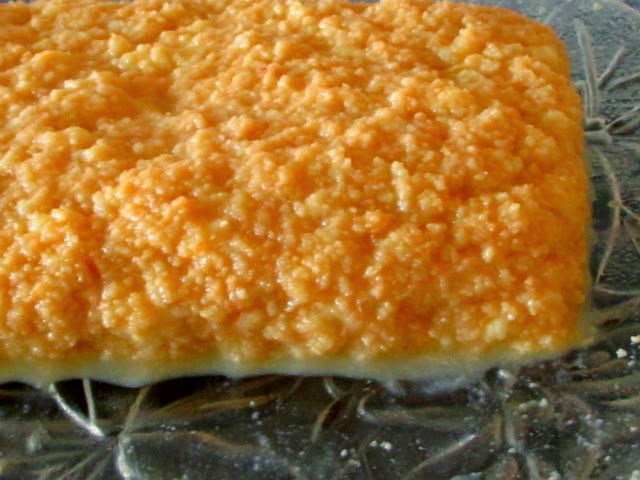
Kalakand

Kalakand 

(Indian Milk Cheese Fudge) 


It seems that right after the partition of India a 'Halwai' (Indian sweet chef)  named Baba Thakur Das who had migrated from Pakistan to Alwar, Rajasthan in India had started his day with experimentation with milk and having added lemon juice to the milk he was fascinated with the resultant cheese and legend has it that he uttered the famous Sentecne 'Arey ye to kala hai' (This is art) which led to the creation of a magnificent sweet dish, Kalakand a kind of Indian Milk Cheese Fudge. Freshly homemade cottage cheese is cooked with reduced milk till it reaches an extremely thick consistency which is milky, cheesy and completely lip smacking.


Now Baba Thakur's descendants say with great pride that recreating the original magic of the Kalakand produced at their store is impossible due to the water and the soil around Alwar which I believe to a certain extent but then again you can still make a gorgeous Kalakand which might not be as good as the ones created at Alwar but with a bit of patience you can create some lip smacking gorgeous dessert.


Before I give the recipe let me emphasize on the fact that certain desserts cannot be made easy by cutting down on time and effort else you shall simply not get the proper taste and flavour. The internet is filled with recipes which uses packaged condensed milk and a short cut method which wouldn't simply give you a superior taste. Believe me I speak from experience. A bit of hard work  is worth the effort. The entire process takes about 2 hour 15 minutes to make and another 1 hour to 2 hours for setting.

Makes 10 large sized Kalakand :-

2 litre full fat milk and yes it must be full fat
1 tbsp to 2 tbsp vinegar diluted with 2 tbsp water
5 to 6 tbsp sugar (please adjust the sweetness as per your taste)
3 green cardamom
2 tbsp blanched halved pistachios
2 tbsp ghee

Simply start of by taking 1.2  litre of the milk and add 1 tsp ghee to it. (The ghee helps in keeping the reduced milk smooth)

Start reducing it. Take the remaining milk and bring to a roaring boil in another pan and then lower heat and add the diluted vinegar and when the cheese forms in 2 minutes. You should have white masses floating in an olive green whey switch off gas once the entire milk is well curdled and then cover it and leave it for 5 minutes. Gather the cheese in a cheesecloth and drain it of its water. After 10 minutes squeeze out the excess water and crumble the cheese as finely as possible.

Meanwhile keep stirring the other pot of milk which you are reducing to avoid scorching the bottom. Once it gets reduced to half its original content add the crumbled cheese and crushed cardamom seeds along with the sugar.

The best way to add sugar as per taste is adding it little by little and checking the taste.

Now keep reducing the mixture of cheese and milk together stirring it from time to time and when it gets reduced to a mass where you see bubbles all over keep stirring the mixture continuously from this point on.


Here is an useful tip. At this point transfer it to a non-stick pan and use a masher to mash the content continuously . Non-stick pans reduces the chances of  scorching. Once the mass is dried up add the remaining  ghee saving a bit for greasing the plate on which you would set it and mix well .

Transfer to the greased plate and make a rectangular block and stud it with blanched halved pistachios and leave it to set at room temperature for 1 hour to 2 hours . Never ever set it in the refrigerator which dries out the Kalakand. Cut squares and enjoy this delightful dessert.


Tips :-


  1. You must use full fat milk else the taste will be compromised upon 
  2. The leftover whey used to cook curries gives it a full bodied flavour and when used to knead chapati or make bread renders it extra soft 
  3. Use the pistachios on the Kalakand while its warm so that it remaisn studded once the Kalakand sets the nuts won't remain intact on it.
  4. Enjoy a bit of warm Kalakand as suggested by the creator's descendants. It tastes amazing when served warm. 
  5. Using the masher ensures that the cottage cheese is evenly distributed and does not form any big lumps anywhere. In case you don't have a masher use the back of a big ladle to use it for the mashing effect. 
  6. For storing it , do use an air-tight container and then put it in the refrigerator. I would personally suggest eating it as fresh as possible but in case you are storing ti the air-tight container helps in retaining the moisture. 
Source of information 

Tehelka 
The Hindu 

This is part of Kolkata Food Blogger's ongoing event Deepavali Festival of Lights with Sweets and Savouries